


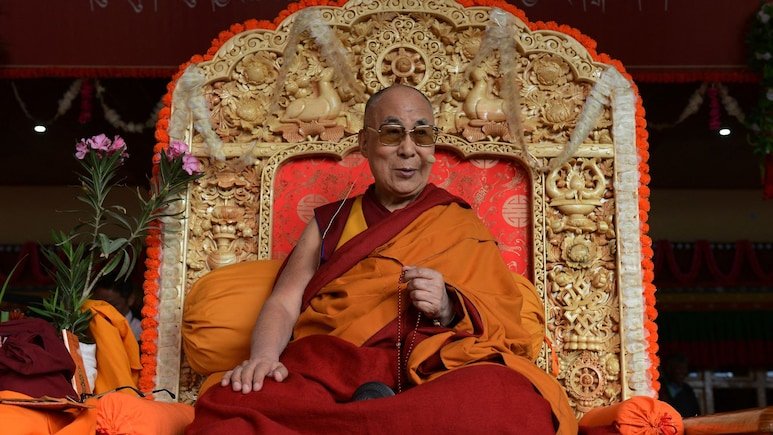
The exiled spiritual leader of Tibet has officially confirmed that the institution of the Dalai Lama will continue after his death, ending years of uncertainty and offering assurance to Buddhist followers around the world. This decision reinforces the 600-year-old lineage of the Dalai Lama, a vital symbol of non-violence, spiritual guidance, and Tibetan identity.
Tenzin Gyatso, the 14th Dalai Lama, is revered by millions not only for his spiritual leadership but also for his lifelong struggle for greater autonomy for Tibet—an expansive plateau in China approximately the size of South Africa. Exiled since 1959 following a failed uprising in Lhasa, he has lived in Dharamshala, Himachal Pradesh, along with thousands of other Tibetans.
His declaration comes just days ahead of his 90th birthday on July 6 and puts to rest growing concerns about the future of Tibetan leadership in the face of his advanced age. Until now, the Dalai Lama had suggested that the role might be discontinued if there was no popular support.
But during a video address at the opening of a religious leaders’ meeting in Dharamshala, he revealed that he had received persistent appeals over the past 14 years from Tibetan exiles, Himalayan Buddhist communities, and even from regions within China and Mongolia.
“In particular, I have received messages through various channels from Tibetans in Tibet making the same appeal,” he said. “In accordance with all these requests, I am affirming that the institution of the Dalai Lama will continue.”
The announcement is being viewed as a landmark moment for both Tibetans and the global Buddhist community. Many had feared that the spiritual lineage could be disrupted or manipulated, especially under Chinese influence.
While Beijing labels him a separatist, the Dalai Lama insists he is “a simple Buddhist monk.” Despite China’s growing influence in Tibetan affairs since it sent troops into the region in 1950, the Dalai Lama remains a powerful figure internationally. His recognition with the Nobel Peace Prize highlighted his lifelong commitment to non-violence and dialogue.
To address fears of external interference, especially from China, he declared that only the Gaden Phodrang Trust, the office of the Dalai Lama, would hold authority over the identification of his successor.
“I hereby reiterate that the Gaden Phodrang Trust has sole authority to recognize the future reincarnation; no one else has any such authority to interfere in this matter,” he stated firmly.
This clarification directly challenges any attempts by the Chinese government to appoint a successor of their own choosing—an act that many Tibetans believe would compromise the authenticity and sanctity of the Dalai Lama’s lineage.
Chemi Lhamo, a 30-year-old Tibetan activist in exile, welcomed the announcement. “There isn’t a doubt that the Dalai Lama institution will also continue to serve the benefit of humanity,” she said. “This sends a clear message to Beijing: we reject any political interference in our spiritual traditions.”
The Dalai Lama had already relinquished political authority in 2011 to the democratically elected Central Tibetan Administration, representing over 130,000 Tibetans worldwide. Despite this transition, he continues to hold immense influence as a spiritual and cultural icon.
Still, he has warned that the sacred process of identifying the next Dalai Lama remains vulnerable to political exploitation. “There is an obvious risk of vested political interests misusing the reincarnation system,” he cautioned.
With his latest affirmation, however, the Dalai Lama has decisively shaped the path forward, ensuring the continuity of Tibetan spiritual leadership and preserving a tradition deeply embedded in the fabric of Tibetan Buddhism.