


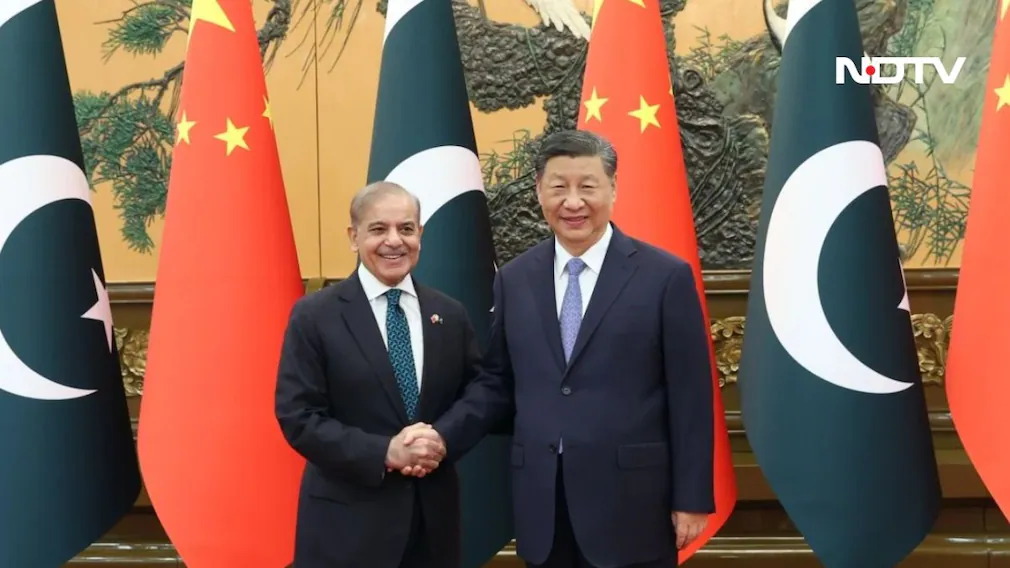
The “two-front” conundrum involving Pakistan and China is not a distant theoretical construct—it is a pressing and ongoing challenge for India, one that demands unwavering vigilance and a well-calibrated strategic response.
An Evolving Alliance That Demands Attention
South Asia’s geopolitical landscape has always been shaped by complex rivalries and shifting alliances. However, in recent years, one development has emerged as a clear and persistent concern for New Delhi: the deepening strategic and operational alliance between China and Pakistan. This is not a fleeting convergence of convenience but a durable, multi-layered partnership with profound implications for India’s national security, economic goals, and regional influence.
Many in India have traditionally viewed the China-Pakistan relationship through a narrow lens—focusing primarily on Islamabad’s reliance on Beijing for military aid or the diplomatic protection China provides in international forums. While those elements remain important, they only represent the visible tip of a deeper and broader collaboration.
More Than Military: The Economic Web of Influence
The China-Pakistan Economic Corridor (CPEC), the crown jewel of Beijing’s Belt and Road Initiative (BRI), exemplifies the strategic entanglement of this alliance. Far beyond a developmental endeavor, CPEC embeds China deeply into Pakistan’s economic framework while also allowing it access to the Arabian Sea through Gwadar Port—effectively bypassing India. This access enables China to significantly reduce logistical costs and time for its Western regions, while simultaneously embedding itself along a route that cuts through Pakistan-occupied Kashmir, a region India considers an integral part of its sovereign territory.
This isn’t just trade—it’s strategy. With Gwadar, China circumvents the long maritime route past India and the Malacca Straits, gaining a direct link to the Middle East and beyond. For India, this challenges its maritime security and its traditional dominance in the Indian Ocean region.
A Mutually Beneficial Strategic Axis
The China-Pakistan partnership is not merely transactional—it is symbiotic. Pakistan gains a critical economic partner and a shield against international scrutiny, especially on issues such as cross-border terrorism. China, in turn, uses Pakistan as a geopolitical counterbalance to India’s growing stature on the world stage.
China’s repeated obstructions at the United Nations, blocking designations of known Pakistani terrorists, are not isolated acts—they reflect Beijing’s long-term investment in protecting Islamabad from global accountability. By supporting Pakistan, China ensures India remains engaged on its western border, diverting attention and resources away from broader regional and global ambitions.
India’s Two-Front Reality
This strategic squeeze is no longer a theoretical problem—it’s a current, visible danger. Events like Operation Sindoor have demonstrated this, as India has encountered advanced Chinese-supplied weapons in Pakistani hands along its western border.
What’s more concerning is Beijing’s attempts to build a broader “trilateral nexus” by engaging with other South Asian neighbors like Bangladesh and Afghanistan. Though these efforts are often couched in terms of economic cooperation and regional stability, they carry the unmistakable imprint of a plan to reduce India’s influence and construct a China-dominated regional order.
How India Should Respond: A Multi-Pronged Approach
1. Strengthening Defence Preparedness
India must continue to maintain a robust military posture. Deterrence is vital—not as an aggressive stance, but as a necessary insurance against strategic misadventures. Investment in indigenous defense manufacturing, rapid modernization of armed forces, and technological superiority must be priorities.
2. Strategic Diplomacy and Regional Engagement
India must leverage its soft power, democratic values, and economic appeal to deepen relationships with regional and global allies. Proactive diplomacy across South Asia, ASEAN nations, and forums like the Quad can help build coalitions that resist unilateral dominance. India must present itself not as a rival to China, but as a dependable partner offering sustainable alternatives.
3. Economic Growth as the Ultimate Shield
Perhaps the most effective long-term strategy lies in strengthening India’s own economic foundation. Projects like the International North-South Transport Corridor and Chabahar Port are critical to countering Chinese infrastructure dominance. While India cannot match China’s financial muscle dollar-for-dollar, it can offer reliability, transparency, and mutual respect—values increasingly valued by many of China’s weary partners.
India must aim to become a regional hub of connectivity, trade, and innovation. A thriving economy with reduced reliance on Chinese imports and enhanced trade partnerships will naturally enhance India’s strategic leverage.
The Road Ahead: Eyes Wide Open
The China-Pakistan nexus is not a temporary alignment—it’s a deeply entrenched geopolitical reality designed to constrain India’s ascent. Ignoring this axis or responding with half-measures would be a grave strategic error.
India must craft and execute a clear, forward-looking national strategy—one that combines deterrence, diplomacy, and domestic development. The goal is not confrontation, but ensuring sovereignty, stability, and security. As regional dynamics continue to shift, India must assert its rightful place as a resilient, powerful, and independent voice in global affairs.