


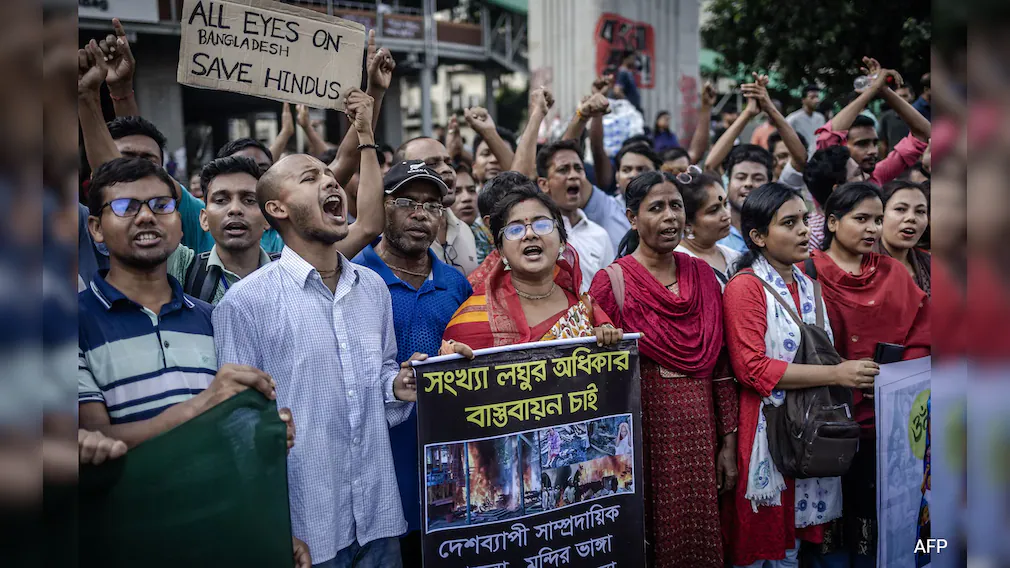
Bangladesh is undergoing a troubling transformation—one marked by rising Islamist radicalism, increasing violence against minorities, and the political rehabilitation of extremist groups. While recent events under Nobel laureate Muhammad Yunus’s interim government have drawn sharp criticism, the descent did not begin with him. It’s a long-running crisis that took root years ago, and one that thrived under the passive watch of Sheikh Hasina’s administration—India’s “great friend.”
A Rising Wave of Violence
The past few months have seen a series of chilling incidents:
-
In April, a Hindu leader was brutally killed.
-
In May, mass protests erupted against women’s legal reforms.
-
In June, a temple was demolished and another minority individual attacked under “blasphemy” allegations.
These are not isolated incidents—they are symptoms of a growing radical tide that has engulfed Bangladesh.
The Jamaat’s Return and the Empowerment of Extremists
One of the most shocking decisions by Yunus’s interim regime was lifting the ban on Jamaat-e-Islami Bangladesh (JIB)—an organization historically complicit in 1971 war crimes. Now legally registered, JIB is set to contest elections again. This development not only threatens minorities but also Bangladesh’s secular Muslim majority.
The Jamaat, a regional offshoot of the Muslim Brotherhood, has long advocated for Sharia rule. Its alignment with the BNP and its student wing’s involvement in violent anti-Hasina protests show how deeply embedded it remains in Bangladesh’s political fabric.
Hefazat-e-Islam: Bangladesh’s Parallel Power
When Jamaat was banned in 2013, new radical groups filled the vacuum. Hefazat-e-Islam emerged as a powerful Islamist movement. It gained traction by opposing gender equality reforms and staging deadly protests, including violent opposition to Indian Prime Minister Narendra Modi’s visit in 2021. Now emboldened by the current political climate, Hefazat and other groups are aggressively shaping the national discourse.
Seeds of Radicalism: A Legacy Ignored
The current turmoil didn’t sprout overnight. The shift toward Islamism began in the 1970s with General Ziaur Rahman’s amendments to Bangladesh’s Constitution. These included:
-
Replacing secularism with religious phrases.
-
Declaring Islam as the state religion in 1988.
The rise of Wahhabism, Gulf-funded mosques and madrasas, and the return of ideologically radicalized migrant workers laid the foundation for modern-day extremism. The Afghan jihad of the 1980s further militarized this mindset—many jihadists returned home with combat experience and a radical vision for Bangladesh.
Hasina’s Blind Eye to Islamism
While Sheikh Hasina’s Awami League prided itself on secularism, her record is checkered. Her regime ignored or failed to stop escalating attacks against Hindus, Buddhists, and secular activists. Under her leadership:
-
Blasphemy-related violence surged.
-
Durga Puja celebrations were repeatedly disrupted.
-
Writers, LGBTQ individuals, and bloggers faced lone-wolf-style killings.
Despite requests by the Hindu-Buddhist-Christian Unity Council in 2018 to form a National Minority Commission and enact protective laws, Hasina’s administration did little.
A Forgotten Secular Dream
The dream of a secular Bangladesh born from the 1971 liberation war has all but faded. Attacks on minorities started just a year later in 1972. The Hindu population, once 20%, has dwindled to just 8%. Violence, desecration of temples, and religious discrimination became normalized—rarely leading to arrests or convictions.
The 2005 coordinated bombings across 63 districts by the Jamaat-ul-Mujahideen Bangladesh (JMB) should have been a national wake-up call. Yet the political establishment, including the Awami League, failed to stop the slow erosion of secular values.
Today’s Crisis: A Result of Years of Neglect
The current backlash against women’s legal reforms and the resurgence of extremist groups are not sudden developments—they are the inevitable outcome of decades of appeasement, denial, and institutional inaction. Yunus may be at the helm now, but the road to today’s crisis was paved long ago.
Even Muslim women and the broader majority community now find themselves vulnerable to this radical wave. Legal reforms are protested, opposition silenced, and any form of religious or ideological dissent crushed under the pretext of “hurting Islamic sentiments.”
Conclusion: A Cautionary Tale for the Region
Bangladesh, once viewed as a beacon of moderation in the Muslim world, now faces the dangerous consequences of radicalisation enabled by both political complacency and ideological opportunism. The shift toward an Islamist state is not merely Yunus’s doing—it is a national tragedy decades in the making.
Unless there’s a decisive return to secular democratic values, Bangladesh may soon become a cautionary tale of how regime change without ideological clarity and minority protection can unravel a nation.