


In a bold joint statement after the latest BRICS summit in Brasil, leaders of the bloc—including Indian Prime Minister Narendra Modi—raised strong concerns over the growing use of unilateral trade practices that they say threaten global commerce. Specifically, they warned about “the rise of unilateral tariff and non-tariff measures which distort trade and are inconsistent with WTO rules.”
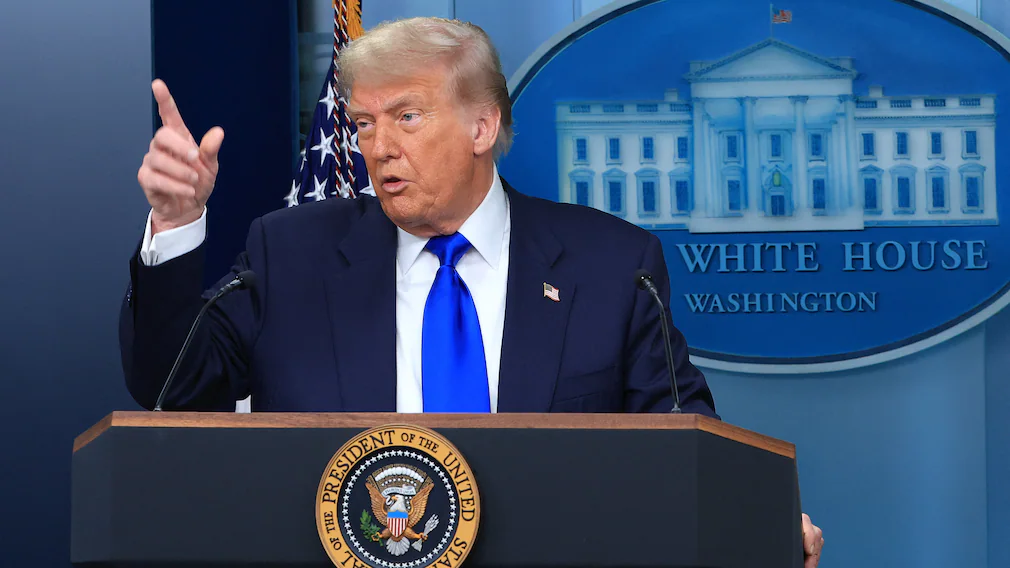
This message comes at a time when former U.S. President Donald Trump has reignited tensions with the BRICS group, accusing it of pursuing “anti-American policies” and announcing an additional 10% tariff on countries aligning with the bloc. Posting on Truth Social, Trump declared, “There will be no exceptions…” but offered no details on what specific policies had triggered the new round of economic aggression.
Six months earlier, Trump threatened to impose a 100% tariff on BRICS countries if they dared to challenge the U.S. dollar’s dominance in global trade. Ironically, this threat accelerated BRICS efforts to develop alternative payment systems and reduce reliance on the dollar. Russia had already suggested that the dollar’s supremacy needed to be “re-assessed,” prompting Trump to respond, “Any country that tries should say hello to tariffs, and goodbye to America!”
BRICS Responds: No Going Back
The backlash from BRICS leaders to Trump’s renewed trade war threats has been firm and unwavering. Brazilian President Luiz Inácio Lula da Silva was especially blunt:
“The world has changed. We don’t want an emperor. We are sovereign countries.”
He reaffirmed BRICS’ commitment to reducing reliance on the dollar, stating there is “no going back,” and emphasized that the bloc has already begun a gradual process of establishing an alternate currency for cross-border trade.
China, entangled in its own long-running tariff dispute with the U.S., responded more diplomatically:
“Trade and tariff wars have no winners. Protectionism offers no way forward.”
Other BRICS and BRICS+ leaders joined the chorus of dissent. South African President Cyril Ramaphosa and Bolivian President Luis Arce also voiced their opposition, while Russian Foreign Minister Sergei Lavrov accused the U.S. of “flagrantly abusing” its position in the global trade system.
What Was Said at the Summit?
The 17th BRICS Summit, held in Brasil on July 6-7, ended with a strong joint declaration criticizing the misuse of tariffs in global trade. Without directly naming Trump or the U.S., the leaders said:
“We voice serious concerns about the rise of unilateral tariff and non-tariff measures which distort trade and are inconsistent with WTO rules.”
They cautioned that the unchecked use of tariffs could “reduce global trade, disrupt global supply chains, and introduce uncertainty into international economic and trade activities, potentially exacerbating existing economic disparities.”
Iran, Israel, and U.S. Airstrikes
Another critical section of the summit’s statement involved international conflict zones. Now a full member of BRICS, Iran received strong backing from the group regarding its ongoing tensions with the U.S. and Israel.
The bloc condemned attacks on Iran’s “civilian infrastructure and peaceful nuclear facilities,” calling such actions a “violation of international law.” This is seen as a direct—though unnamed—critique of American B-2 stealth bomber operations that dropped bunker-busting bombs on Iranian nuclear sites.
Additionally, BRICS expressed “grave concern” for the humanitarian situation in Gaza and strongly condemned the April 22 terrorist attack in Jammu and Kashmir’s Pahalgam.
Why Is Trump Targeting BRICS?
Despite skepticism from Western analysts, the growing momentum of BRICS seems to be unsettling Washington. What began in 2009 as BRIC (Brazil, Russia, India, China) expanded into BRICS with South Africa in 2010 and now includes a formidable roster of new members: Egypt, Ethiopia, the UAE, and Iran (2024), with Indonesia joining in 2025.
Several countries—including Saudi Arabia, Turkey, Pakistan, and Venezuela—are seeking full membership, while others like Nigeria, Kazakhstan, and Thailand hold “partner” status. The bloc’s expanding global footprint signals a real shift in the geopolitical balance of power.
Trump’s aggressive rhetoric appears to be a reaction to the bloc’s rising influence among developing and emerging economies—especially as it challenges U.S. dominance in trade and finance. From currency realignment to tariff retaliation, Trump views BRICS not just as a trade threat, but as a symbol of declining Western leverage.
“There is a clear struggle between the old stagnant bloc of the US and Europe on one side, and the emerging bloc of BRICS countries on the other,” said Bolivia’s Luis Arce.
A Global Tug-of-War
The BRICS alliance is not without its challenges—bringing together democracies like India and Brazil with authoritarian regimes like Russia and China is no small feat. Critics have also questioned the bloc’s long-term cohesion and effectiveness, given the economic disparities between its members.
Yet, the growing membership and increasing appeal of BRICS indicate it’s becoming the voice of the Global South. As more countries express interest in joining and as the group continues to advocate for a multipolar world, the challenge to U.S. economic supremacy becomes harder to ignore.
Conclusion:
The BRICS bloc’s unified front against unilateral U.S. tariffs marks a defining moment in global trade relations. With leaders calling for economic sovereignty, reduced dollar dependence, and fairer trade practices, the traditional dominance of the West—particularly under Trump’s aggressive economic policies—is being confronted head-on. Whether BRICS can maintain unity and translate ambition into action remains to be seen, but one thing is clear: the global order is shifting.