


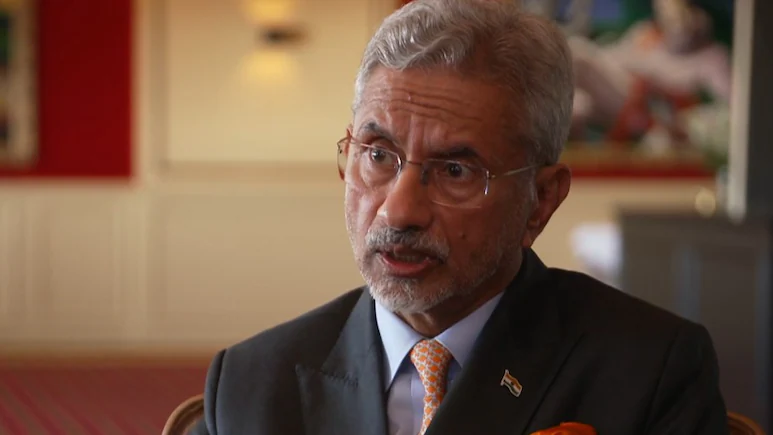
India is actively engaging with American lawmakers over a controversial sanctions bill introduced in the U.S. Congress, which proposes steep penalties for countries continuing trade with Russia. The proposed legislation, spearheaded by Republican Senator Lindsey Graham, seeks to impose a massive 500% tariff on goods from nations such as India and China that maintain trade ties with Moscow following Russia’s full-scale invasion of Ukraine in 2022.
Speaking at a press conference in Washington on Wednesday, External Affairs Minister S. Jaishankar acknowledged the potential implications of the bill. “We will cross that bridge when we come to it,” he remarked, emphasizing that developments in the U.S. Congress are closely monitored by India when they affect national interests.
He further noted, “Regarding Senator Lindsey Graham’s bill, any development which is happening in the US Congress is of interest to us if it impacts our interest or could impact our interest. Our concerns and interests—especially around energy security—have been conveyed to Senator Graham. We’ll have to see how things unfold.”
About the Sanctions Bill
Senator Lindsey Graham, known for his hawkish foreign policy stance, is pushing a new sanctions bill aimed at intensifying pressure on nations perceived to be supporting Russia economically. The bill, which has already garnered 84 co-sponsors, proposes that countries buying oil and other goods from Russia—and not assisting Ukraine—face punitive tariffs when exporting to the U.S.
“India and China buy 70% of Putin’s oil. They’re keeping his war machine alive,” Graham said during an interview with ABC. “My bill enables the President to impose a 500% tariff on imports from these countries to force them to stop supporting Russia’s economy and pressure Putin to negotiate.”
Interestingly, the bill includes a provision allowing former President Donald Trump—should he return to office—to waive the sanctions at his discretion.
How the Bill May Impact India
India, the world’s third-largest oil importer, has ramped up Russian oil purchases since the Ukraine invasion due to steep discounts and reduced availability from traditional suppliers in the Middle East. Prior to the war, Russian oil accounted for less than 1% of India’s total imports. By mid-2024, that figure surged to over 40%, reflecting a dramatic pivot in India’s energy sourcing.
In June 2025, Indian refiners imported up to 2.2 million barrels per day of Russian crude—the highest volume in two years. This heavy reliance on discounted Russian oil puts India directly in the crosshairs of the proposed U.S. sanctions.
If the bill passes, the impact could be severe. A 500% tariff on Indian exports to the U.S. would strain bilateral trade, especially for industries such as pharmaceuticals, textiles, and technology. However, a new trade agreement being negotiated between India and the U.S. could potentially reduce some existing tariffs, providing a buffer if the sanctions bill becomes law.
Diplomatic Balancing Act
India has consistently defended its energy ties with Russia on strategic and economic grounds. Officials argue that purchasing discounted oil is essential for maintaining affordable energy prices domestically, especially for a country with over 1.4 billion citizens and a rapidly growing economy.
While Western nations have sharply reduced or banned imports of Russian oil, India has maintained that its energy policies are driven by national interest and energy security, not geopolitics. As a result, New Delhi finds itself balancing its longstanding ties with Moscow and its growing partnership with Washington.
Conclusion
The proposed U.S. sanctions bill adds a new layer of complexity to the India-U.S. relationship. As India continues to assert its independent foreign policy, it must also navigate the implications of a bill that could fundamentally alter its trade dynamics with America.
India’s strategic response—diplomatic engagement, trade negotiations, and energy diversification—will be crucial in the months ahead. Whether the bill becomes law or not, it underscores the increasing interplay between geopolitics and global trade, and how nations like India must carefully tread the line between principle and pragmatism.