


The Congress party on Thursday hailed the Supreme Court’s recent recommendation to the Election Commission (EC) regarding the inclusion of Aadhaar cards, voter ID cards, and ration cards in Bihar’s Special Intensive Revision (SIR) of electoral rolls, calling it a significant step in favor of democratic integrity.
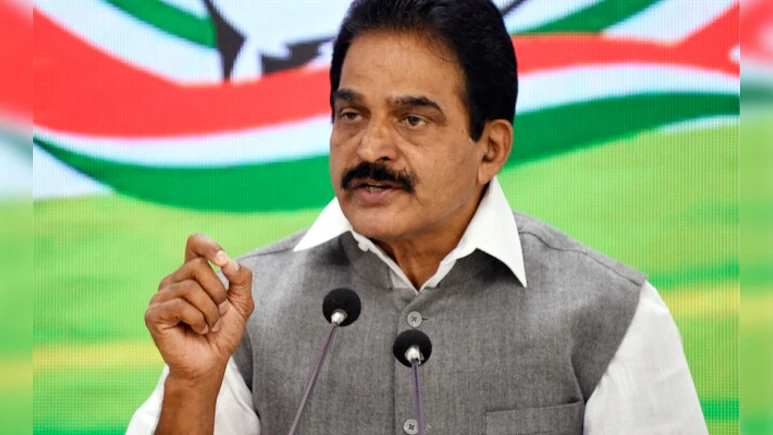
Congress General Secretary (Organisation) K.C. Venugopal described the development as a “relief for democracy” and expressed optimism that the EC would comply with the Supreme Court’s view. “The case is scheduled for another hearing on the 28th of this month,” he told reporters. “The Supreme Court suggesting that Aadhaar, voter-ID, and ration cards should be allowed for voter verification is a big move in itself.”
Venugopal emphasized that the apex court’s observation highlights the need for a comprehensive and inclusive verification process. “This move will strengthen the democratic process, and we believe the EC will align itself with the court’s guidance,” he added.
On Thursday, a bench comprising Justices Sudhanshu Dhulia and Joymalya Bagchi allowed the EC to proceed with the Special Intensive Revision in Bihar, terming it a “constitutional mandate.” However, the court also expressed concerns about the timing of the initiative and offered its preliminary view that Aadhaar, voter ID, and ration cards should be accepted as valid identification during the revision.
“We are of the prima facie view that Aadhaar cards, voter-ID cards, and ration cards be allowed in the Special Intensive Revision of the electoral rolls,” the bench stated.
While none of the petitioners — including leaders from ten opposition parties — had sought an interim halt to the EC’s process, the court has requested a response from the EC and scheduled the next hearing for July 28. The EC has been instructed to file its counter-affidavit by July 21, with rejoinders to be submitted by July 28.
The court clarified that it does not question the EC’s intentions or integrity but noted that the timing of the revision has raised concerns.
This development marks a crucial juncture in the ongoing electoral process in Bihar, with potential implications for voter verification mechanisms across the country.