


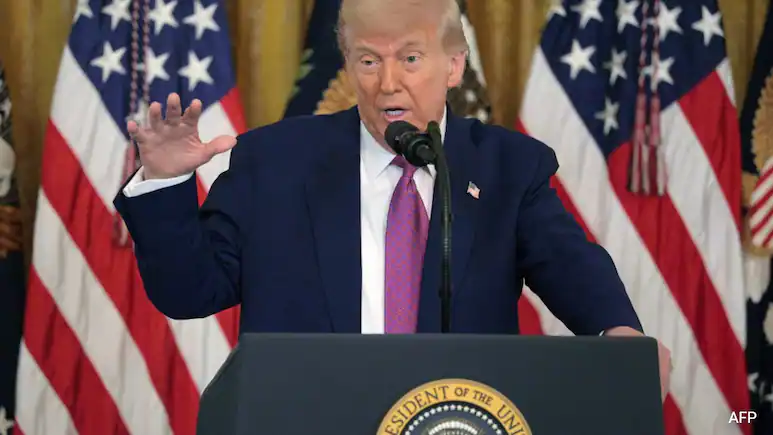
U.S. President Donald Trump cautioned Ukraine on Tuesday not to target Moscow, responding to growing concerns over a new American plan to provide advanced weapons to Kyiv—moves the Kremlin claims will hinder any prospects for peace.
This follows Trump’s announcement on Monday that he was giving Russia 50 days to reach a peace deal with Ukraine. Frustrated by the continued aggression from Moscow, Trump revealed plans for fresh military aid to Kyiv from NATO allies and warned of punitive tariffs against countries still trading with Russia if peace is not achieved.
In a dramatic development, the Financial Times reported that Trump had discussed the potential of supplying long-range missiles with Ukrainian President Volodymyr Zelensky—possibly enabling strikes on Russian territory, including its capital. However, when asked at a White House press conference if he supported targeting Moscow, Trump was clear: “No, he shouldn’t target Moscow.”
From the outset of his presidency, Trump pledged to end the prolonged conflict and reduce the billions spent in U.S. weapons aid to Ukraine. Initially favoring diplomacy, Trump maintained close communication with Russian President Vladimir Putin and pushed for peace talks, which so far have yielded little more than prisoner exchanges.
Russia, meanwhile, has stepped up its offensive in recent months, launching a record number of drone and missile strikes across Ukraine. Moscow reacted cautiously to Trump’s latest announcement, warning that it may signal escalation, not resolution.
“It appears this decision from Washington and NATO will be taken by Kyiv as a sign to continue the war,” Kremlin spokesman Dmitry Peskov said. “President Trump’s statement is very serious, and we need time to analyze it.”
Trump further warned that failure to secure a peace agreement within 50 days would lead the U.S. to impose steep tariffs on Russia’s remaining trade partners. This strategy aims to cut off Moscow’s funding pipeline, even as Russia continues to prop up its economy through defense spending and redirecting energy exports to countries like China and India.
European Reactions: Divided But Supportive
While many European nations have welcomed Trump’s tough stance, some divisions remain. Slovakia, under pro-Russian populist Prime Minister Robert Fico, has resisted new EU sanctions.
EU foreign policy chief Kaja Kallas welcomed the increase in U.S. weapons support but called for Washington to share the financial load.
“If you promise weapons but expect others to pay, then they’re not truly your contribution,” Kallas said at a Brussels meeting of EU foreign ministers.
Trump, who has long criticized NATO for leaning too heavily on U.S. defense spending, continues urging allies to buy American-made arms and boost their military budgets.
Denmark, Sweden, and the Netherlands—recent NATO joiners following Russia’s 2022 invasion—expressed interest in supporting Trump’s plan.
Swedish Defense Minister Pål Jonson affirmed, “We will contribute. Ukraine urgently needs more air defense as Russia continues relentless bombings.”
On the Ground: Hope, Doubt, and Chess Moves
Since Russia launched its full-scale offensive, tens of thousands have died, and millions have fled from war-ravaged eastern and southern Ukraine. Despite the new proposals, many Ukrainians remain skeptical of real change.
In Moscow, civilians saw Trump’s declaration as political posturing.
“It’s a game of chess,” said Svetlana, a 47-year-old aviation engineer. “He gave 50 days. Then there will be more. We’re just waiting for our president’s next move.”
In eastern Ukraine, frontline soldiers voiced cautious optimism.
“I don’t believe him. Too many promises have already been broken,” said a soldier using the call sign “Shah.”
Others lamented the delays:
“The Patriots should have come earlier—they could have saved lives,” said another fighter known as “Master.”
Still, some see any step toward enhanced aid as a potential game-changer.
“If there’s even a slight chance to improve our situation and weaken theirs, that’s already a win,” said Ruslan, a 29-year-old soldier.
Conclusion:
President Trump’s latest stance signals a renewed push for peace in Ukraine but underlined by sharp consequences if diplomacy fails. With the clock ticking on a 50-day deadline and new military support on the table, all eyes are now on Moscow’s next move—and whether Kyiv will heed Trump’s warning to avoid escalating the conflict by targeting the Russian capital.