


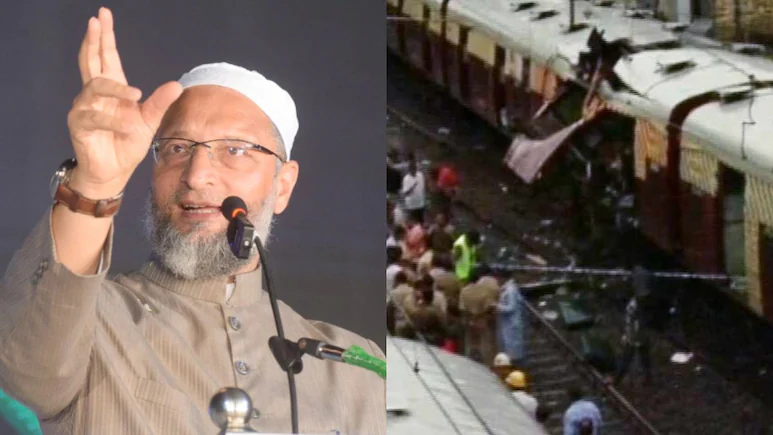
In a significant judicial development, the Bombay High Court acquitted 12 men previously convicted in the 2006 Mumbai train blasts case, citing a complete failure on the part of the prosecution to substantiate the charges. The verdict overturned a 2015 trial court ruling, which had sentenced five of them to death and the remaining seven to life imprisonment.
The blasts, which occurred on July 11, 2006, were one of the deadliest terror attacks in India, killing 189 people and injuring hundreds more. Within a span of just 11 minutes during peak rush hour, seven coordinated bomb explosions ripped through first-class compartments of Mumbai’s local trains. The bombs, concealed in pressure cookers, detonated near stations including Matunga Road, Mahim Junction, Bandra, Khar Road, Jogeshwari, Bhayandar, and Borivali.
Owaisi Slams Investigative Lapses, Seeks Action Against ATS
Shortly after the acquittal, Hyderabad MP Asaduddin Owaisi voiced serious concerns over the handling of the case by law enforcement. Taking to X (formerly Twitter), the AIMIM chief said, “12 Muslim men were in jail for 18 years for a crime they didn’t commit. Their prime life is gone. 180 families who lost their loved ones, several injured—no closure for them.”
Owaisi questioned whether any action would be taken against the Maharashtra Anti-Terrorism Squad (ATS), which led the initial investigation. “Will the government act against the officers who botched this case so gravely?” he asked.
A Miscarriage of Justice?
Highlighting the human cost of the flawed prosecution, Owaisi said two of the acquitted lost both their parents during their time in prison, while another man lost his wife and never got to say a final goodbye.
“Innocent people are jailed for years, and when released, they return to nothing. No job, no family, no justice,” he said.
He further criticized the approach of police in high-profile terror cases, stating, “When there is public pressure, police often begin with an assumption of guilt. Media trials then seal a narrative even before the courts begin proceedings.”
According to Owaisi, this case is yet another reminder that investigative agencies must be held accountable for the lives destroyed by wrongful arrests and convictions. “In many such terror cases, agencies have failed us miserably,” he noted.
Conclusion: A Call for Reform and Accountability
The 2006 Mumbai train blasts verdict marks not only a turning point in the legal proceedings of one of India’s most tragic terror attacks, but also calls into question the integrity of investigative mechanisms. With 12 lives derailed by wrongful incarceration, and justice delayed for victims’ families, there is a growing demand for institutional accountability and reform within the police and judiciary.
As the nation reflects on this development, the focus shifts to whether the government will act upon the High Court’s observations—or allow another chapter of justice delayed and denied to fade into silence.