


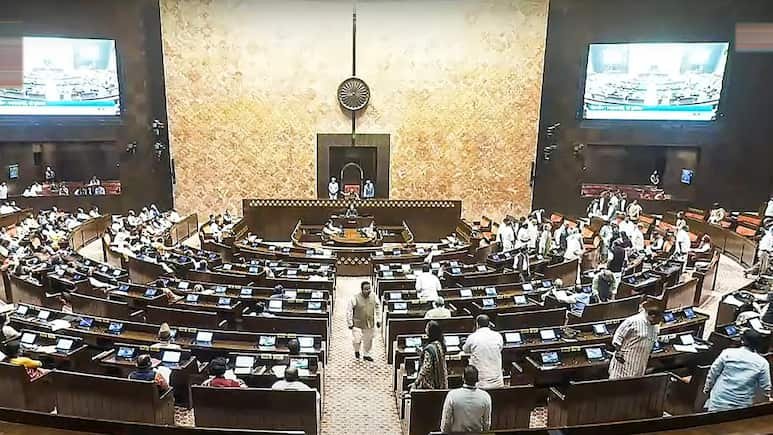
In a significant political development, the Election Commission of India (ECI) is poised to announce the Vice Presidential Election 2025 schedule within the next 48 to 72 hours, following the unexpected resignation of Vice President Jagdeep Dhankhar. Sources confirm that India could see the appointment of a new Vice President by the last week of August 2025.
President Droupadi Murmu formally accepted Mr. Dhankhar’s resignation, leaving the office of Vice President vacant nearly two years ahead of the scheduled end of his term. His resignation has triggered a constitutional process that must now be handled with urgency and precision.
Election Timeline Under the Constitution
As per Article 68(2) of the Indian Constitution, there is no strict deadline for holding a Vice Presidential election in the event of a resignation. The law simply states the election must be conducted “as soon as possible.” Accordingly, the Election Commission has begun preparations in coordination with the Ministry of Home Affairs, which has formally communicated the resignation to the Commission.
An official notification calling for the election is expected within two to three days. Once issued, the Election Commission is required, under the Presidential and Vice-Presidential Elections Act, 1952, to complete the entire election process—nominations, scrutiny, withdrawals, polling, and counting—within 32 days.
Nomination papers are to be submitted within 14 days of the notification. If all goes as per protocol, the country will have a new Vice President sworn in by the end of August 2025.
Political Storm Behind the Resignation
While Mr. Dhankhar cited health reasons for his resignation, the political undercurrent tells a different story. The exit follows a week of intense political friction that reportedly began with his acceptance of a motion by opposition MPs in the Rajya Sabha—where he served as Chairman—aimed at removing Justice Yashwant Varma.
Justice Varma is currently under a corruption investigation after substantial amounts of unaccounted cash were recovered from his residence. Although the Union government was planning to initiate a similar motion in the Lok Sabha to retain narrative control, Mr. Dhankhar’s acceptance of the Rajya Sabha motion effectively preempted their move.
PM Modi and Cabinet Ministers React
Sources suggest that Prime Minister Narendra Modi was briefed immediately after the motion was accepted. A high-level emergency meeting was held with senior ministers including Defence Minister Rajnath Singh, Finance Minister Nirmala Sitharaman, and Home Minister Amit Shah.
In a coordinated strategy, batches of BJP MPs were briefed and asked to sign a counter-motion against the Vice President’s perceived breach of protocol. They were instructed to remain in Delhi for the next four days as the situation escalated. Hours later, Mr. Dhankhar tendered his resignation.
Implications for Vice Presidential Election 2025
The early vacancy has triggered a rare mid-term election for the office of Vice President. With political narratives shifting and alliances being recalibrated, the Vice Presidential Election 2025 may play a critical role in shaping the upper house’s future dynamics ahead of the 2026 general elections.
It remains to be seen whether this resignation was merely procedural or a strategic exit in a politically sensitive environment. For now, the Election Commission’s upcoming announcement will mark the beginning of a crucial transition period.
Conclusion
The sudden resignation of Jagdeep Dhankhar and the ensuing political ripple effects have put the spotlight on the upcoming Vice Presidential Election 2025. As India prepares for this high-stakes election, the focus will remain on who emerges as the frontrunner for the second-highest constitutional post in the country—and how the process unfolds in an increasingly charged political climate.