


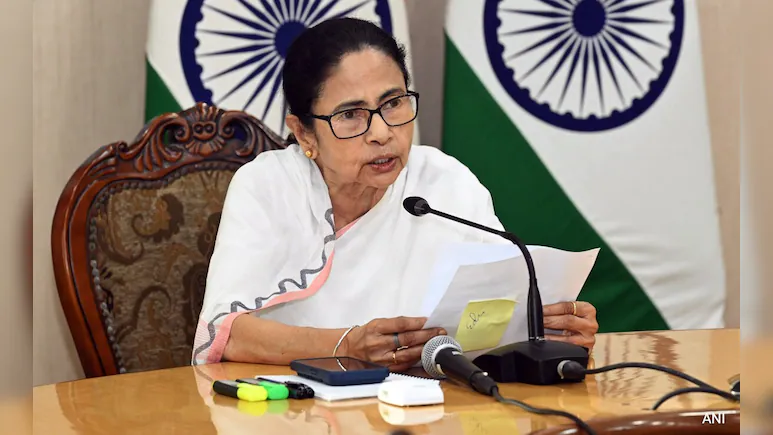
In a significant political and administrative move ahead of the upcoming elections, West Bengal Chief Minister Mamata Banerjee has unveiled a pioneering grassroots initiative titled ‘Amader Para, Amader Samadhan’ (translated as Our Locality, Our Solution). Designed to address everyday public grievances at the local level, the program marks a notable shift in citizen-centric governance.
Describing it as the first initiative of its kind in India, CM Banerjee emphasized that the goal is to resolve small yet critical civic issues — such as broken taps, poor water supply, or damaged roads — through direct community involvement.
The project is scheduled to kick off on August 2, with camps being set up at every three polling booths across the state. Each booth will receive a government sanction of ₹10 lakh, with the overall project budget estimated at ₹8,000 crore.
“Even though the Central Government continues to deny Bengal its rightful dues, we are committed to ensuring that the smiles of our people are not lost,” said Mamata Banerjee during a press conference held at the state secretariat. “We are acting on the principle that small is beautiful, which is the core philosophy of this initiative.”
The new initiative will function independently of the state’s flagship outreach scheme ‘Duare Sarkar’ (Government at Your Doorstep), which is set to resume in December. The Chief Minister reassured that the two programs will complement, not overlap, each other.
The Amader Para, Amader Samadhan program will be monitored by a high-level task force led by the state’s Chief Secretary. Importantly, it introduces a participatory governance model, where local residents themselves will identify issues and propose solutions. The government will then act as a facilitator and executor, empowering citizens to shape their own communities.
Sources within the Trinamool Congress (TMC) suggest that the initiative is not just a welfare measure but also a strategic grassroots engagement tool designed to strengthen community-government relationships ahead of the elections.
By targeting hyperlocal issues with state-level support, the Amader Para, Amader Samadhan program promises a bottom-up governance model that could potentially set a new benchmark for participative administration in India.