


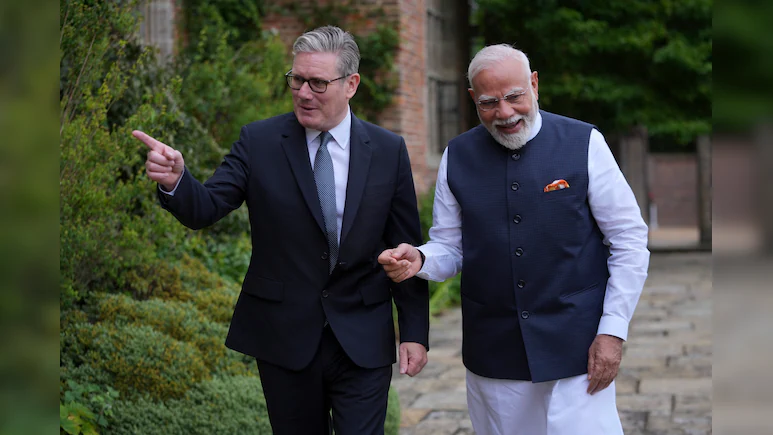
The recently signed Comprehensive Economic and Trade Agreement (CETA) between India and the United Kingdom marks a defining moment in global trade diplomacy. More than a routine tariff reduction, it signals a strategic realignment between two democracies with deep-rooted historical ties and forward-looking economic ambitions.
Projected to almost double bilateral trade to over $112 billion by 2030, this agreement is more than an economic pact—it’s a blueprint for prosperity, innovation, and partnership that reaches far beyond borders and time. It recognizes India’s emergence as a global economic power and the UK’s post-Brexit vision of dynamic, high-value trade relationships.
Modernizing Legacy: Moving Beyond Colonial Shadows
For decades, Indo-UK relations were tethered to a complex colonial past. CETA reorients this narrative—ushering in a new era grounded in mutual respect, shared democratic values, and economic parity. It reflects India’s ambitions as a manufacturing and digital leader, while also opening the door for the UK to integrate with the world’s most populous democracy and a rapidly growing middle-class consumer base.
India’s Gains: Export Growth, Employment, and Market Access
For India, CETA offers:
-
Duty-free access for 99% of exports including textiles, leather, gems, and marine products.
-
Boosts to labour-intensive industries, generating employment and strengthening the Make in India mission.
-
95% of agricultural exports to the UK entering tariff-free, diversifying markets for Indian farmers.
-
Game-changing visa mobility for professionals—entry into 35 UK sectors for two years, even without a UK office presence.
This agreement elevates India’s participation in global supply chains, promoting both economic upliftment and global competitiveness.
UK’s Gains: Tariff Cuts and Strategic Market Entry
For the UK, the deal secures:
-
Access to India’s vast 1.4 billion-strong market.
-
Slashing of high tariffs on Scotch whisky (down from 150% to 40%), automobiles, and medical devices.
-
Sharp EV tariff cuts from 110% to 10% under specific quotas—ushering opportunities for British carmakers.
-
Provisions for digital services and finance, providing certainty and a regulatory framework vital for UK-based SMEs and startups.
The CETA ensures streamlined customs and simplified compliance, making UK businesses more agile in one of the world’s most promising markets.
Strategic Depth: Beyond Goods and Services
More than trade, the agreement institutionalizes cooperation in:
-
Defence collaboration—a landmark inclusion after decades of cautious engagement.
-
Clean energy, AI, R&D, climate action, and education—targeted sectors under the jointly crafted Vision 2035 roadmap.
-
Professional mobility and qualification recognition, enabling educational and career pathways between nations.
This framework nurtures collaborative innovation—where Indian and British talent co-create solutions for global challenges in healthcare, climate, and technology.
Shared Growth, Shared Values
CETA embeds progressive chapters on:
-
Labour rights and fair working conditions
-
Gender equality and social inclusion
-
Anti-corruption and governance transparency
These additions underscore a responsible, sustainable trade philosophy, setting a precedent for future trade negotiations by integrating ethical values with economic growth.
A Legacy for Future Generations
In an era of geopolitical tension and fractured trade norms, the CETA Agreement between India and UK sends a strong message: economic cooperation, when built on trust and shared purpose, is a powerful catalyst for a prosperous and interconnected world.
As Prime Minister Narendra Modi noted, this is an investment in the future. For young citizens on both sides, this is not just about commerce—it’s an inheritance of opportunity, collaboration, and cultural connection.
Conclusion: A Transformative Chapter Begins
The CETA Agreement Between India and UK is not merely transactional—it is transformational. It marks a turning point in Indo-British relations, fostering mutual growth while addressing pressing global priorities.
As tariffs fall and partnerships rise, the world witnesses a powerful new alignment—where legacy meets leadership, and trade builds tomorrow’s trust